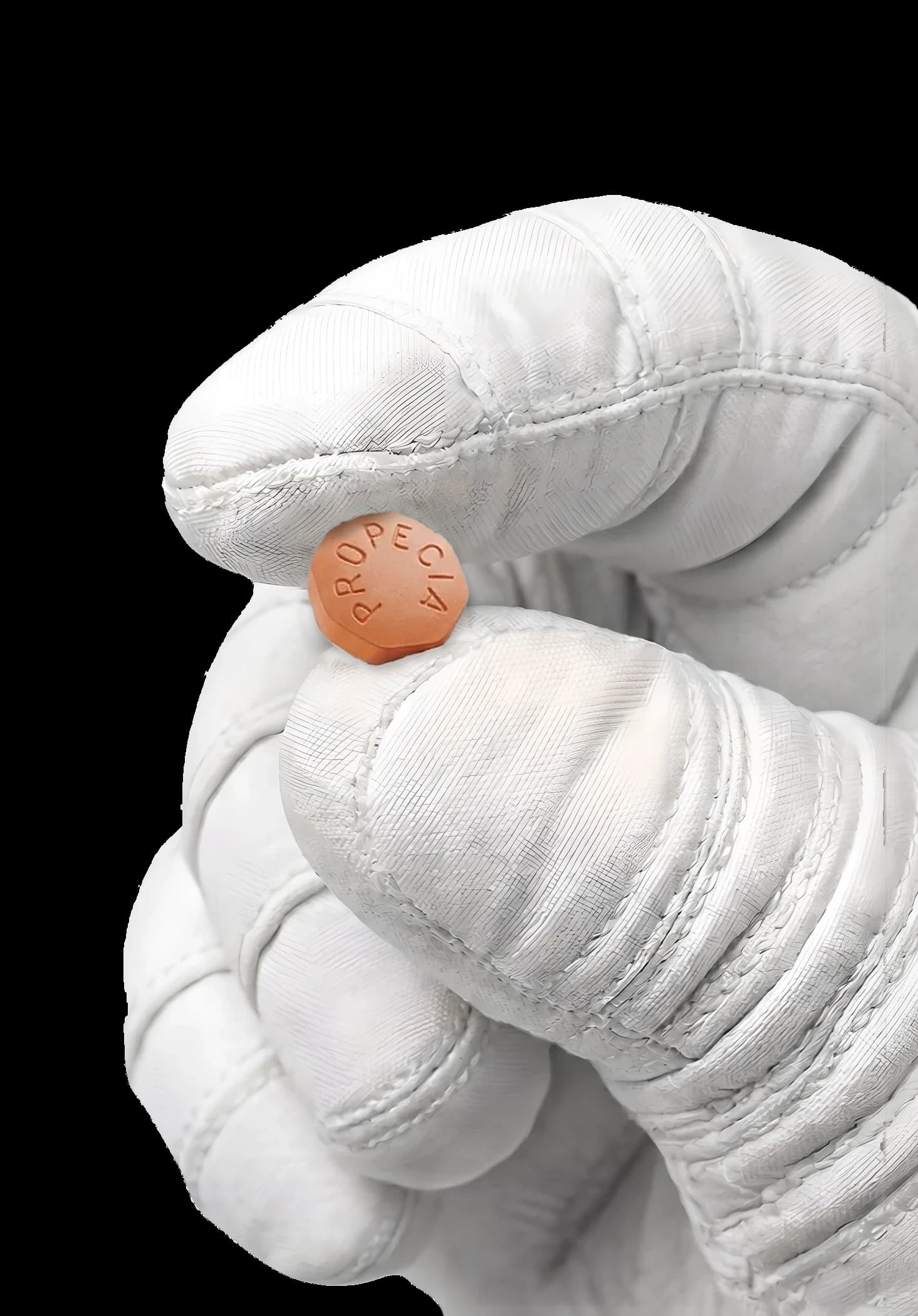



Finasteride
(generic Propecia)
A once-daily tablet medically proven to treat male pattern hair loss. The same active ingredient as Propecia, it helps stop hair loss and regrow hair.
LICENSED PHARMACY & UK-LICENSED DOCTORS · FREE DISCREET DELIVERY
FINASTERIDE 1 MG · HAIR LOSS TABLET · ONCE DAILY
Free discreet delivery
Results vary from person to person, and hair regrows slowly, so patience is important.
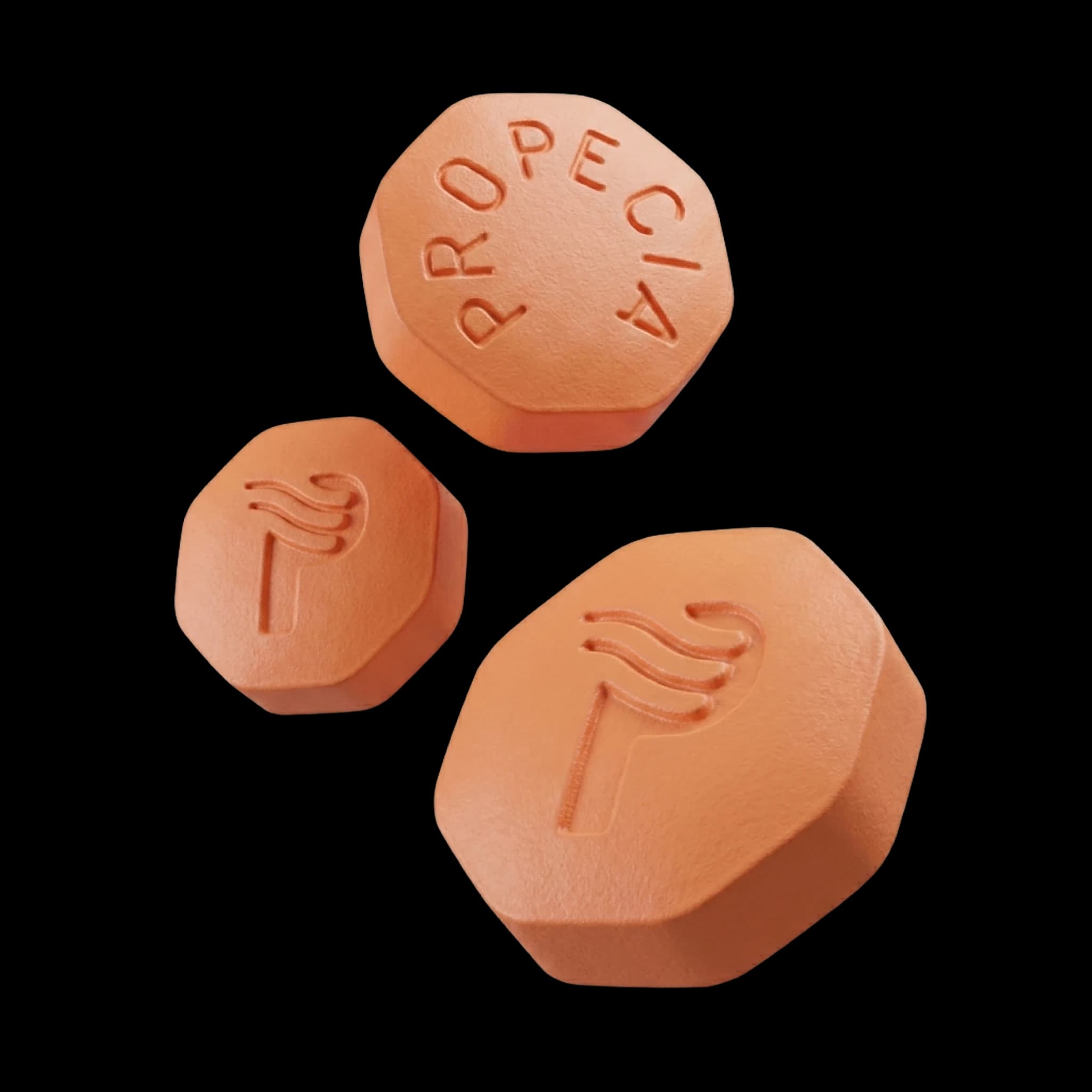
Propecia is the brand name for finasteride 1 mg, a once-daily prescription tablet used to treat male pattern hair loss (androgenetic alopecia) in men. It is licensed to increase hair growth on the scalp and to prevent further hair loss.
ABOUT THE MEDICATION
Propecia is the brand name for finasteride 1 mg, a once-daily prescription tablet used to treat male pattern hair loss (androgenetic alopecia) in men. It is licensed to increase hair growth on the scalp and to prevent further hair loss. Finasteride belongs to a group of medicines called type II 5-alpha reductase inhibitors.
Male pattern hair loss is a common condition that usually shows as a receding hairline, thinning on the crown, or both. It is caused by a combination of genetics and a hormone called dihydrotestosterone (DHT). Propecia works best in men with mild to moderate hair loss, rather than complete baldness, because hair that has been lost over a long period may not come back.
KEY FACTS
Propecia is a tablet taken once a day, every day, with or without food.
Propecia (finasteride 1 mg) is licensed in the UK to treat male pattern hair loss in men.
Propecia is for men aged 18 and over with male pattern hair loss.
It usually takes 3 to 6 months of daily treatment before your hair loss starts to stabilise, so keep taking Propecia every day even if you do not see a difference straight away.
Propecia comes in one strength: 1 mg of finasteride per tablet, in packs of 28 or 84 tablets.
One 1mg tablet once a day
Licensed in the UK for hair loss in men
Lowers DHT levels in the scalp
Taken with or without food
How Propecia Works
In men who are genetically prone to hair loss, DHT gradually shrinks (miniaturises) the hair follicles on the scalp. Each hair then spends less time growing, becomes thinner and shorter, and eventually may stop growing altogether.
Finasteride blocks the enzyme type II 5-alpha reductase, which converts testosterone into DHT. This lowers DHT levels in the scalp and the blood, which slows or stops the shrinking of the hair follicles and helps more hairs move back into their active growing phase.
It usually takes 3 to 6 months before hair loss stabilises. In clinical studies, the increase in hair count was greatest after about 2 years of treatment.
In Practice
Propecia needs to be taken every day for as long as you want to keep the benefit.
Taking more than 1 mg a day does not make Propecia work any better.
Propecia does not affect hair on other parts of the body.
Dosing & How to Take
Take one 1 mg tablet once a day, with or without food, preferably at about the same time each day so it becomes part of your routine.
If you forget a dose, just take your next dose as normal. Do not take a double dose to make up for a forgotten one. If you take too many tablets by mistake, contact your doctor straight away.
It usually takes 3 to 6 months of daily treatment before your hair loss starts to stabilise, so keep taking Propecia every day even if you do not see a difference straight away.
Women who are pregnant, or who could become pregnant, must not handle crushed or broken Propecia tablets.
Side Effects
Most men who take Propecia do not get side effects, and when they do happen they are usually mild. In 12-month clinical studies, only 1.7% of men taking Propecia stopped treatment because of side effects, compared with 2.1% of men taking placebo.
A lower sex drive
Difficulty getting an erection
Problems with ejaculation, such as a smaller amount of semen
Breast tenderness or enlargement, pain in the testicles, blood in the semen, palpitations, anxiety, changes in liver blood tests, and male infertility or poor semen quality
Low mood or depression (feelings of severe sadness or worthlessness)
Thoughts of harming yourself or suicidal thoughts
Signs of an allergic reaction, such as swelling of the lips, face, tongue or throat, difficulty swallowing or breathing, or hives (itchy lumps under the skin)
In studies, these sexual side effects affected 3.8% of men taking Propecia in the first year, compared with 2.1% on placebo, and became less common the longer men took it. These are not all of the possible side effects. Speak to your healthcare provider about any side effects that trouble you, get worse or do not go away.
Effectiveness
3
months: earliest improvement vs placebo
Results vary from person to person, and hair regrows slowly, so patience is important. In clinical studies of 1,879 men aged 18 to 41 with mild to moderate hair loss, men taking Propecia saw improvements compared with placebo from as early as 3 months, based on their own and their doctors' assessments.
+88
more hairs in 5.1 cm² of scalp after 2 years
In two 5-year studies of men with hair loss on the crown, men taking Propecia had an average of 88 more hairs in a small measured area of scalp (5.1 cm²) after 2 years, and still had 38 more hairs than at the start after 5 years. Over the same period, men taking placebo continued to lose hair, with 239 fewer hairs in the same area by year 5.
On standardised photographs, 48% of men treated with Propecia for 5 years were rated as improved and a further 42% as unchanged, compared with 25% of men on placebo who were rated as improved or unchanged.
In other words, for most men Propecia either regrows some hair or stops the hair loss getting worse.
Propecia comes in one strength: 1 mg of finasteride per tablet, in packs of 28 or 84 tablets.
Compare
Real medication. Real doctors. No inflated prices. Just results.
(generic Propecia)
A once-daily tablet medically proven to treat male pattern hair loss. The same active ingredient as Propecia, it helps stop hair loss and regrow hair.
(oral semaglutide)
New for 2026. The UK's first once-daily GLP-1 weight loss tablet, MHRA-approved in June 2026. The same active ingredient as the Wegovy injection, with comparable weight loss in trials — no needles required.
(sildenafil)
The original erectile dysfunction tablet. Taken around an hour before sex, sildenafil helps you get and keep an erection when you are sexually aroused.
(generic Valtrex)
A daily antiviral tablet for people already diagnosed with herpes, to help reduce how often outbreaks happen and lower the risk of passing the virus on.
Price includes medication only, if prescribed. An active FromMars membership is required and billed separately. Membership does not include or guarantee a prescription; medication is not available without a membership.
Drug Interactions
Do not take Propecia with finasteride 5 mg (Proscar), dutasteride or any similar medicine.
No information is available on using Propecia with minoxidil applied to the scalp. Speak to your clinician before using them together.
Propecia does not usually affect other medicines, and other medicines are unlikely to affect Propecia to a clinically important degree.
Always tell your healthcare provider about everything you take, including prescription medicines, over-the-counter products, vitamins and herbal supplements.
WHO IT'S FOR
Propecia is for men aged 18 and over with male pattern hair loss. Before prescribing, a FromMars clinician will review your hair loss, your medical history, your mental health and any other medicines you take. It is not the right medicine for everyone.
You must not take Propecia if you are a woman, as Propecia is for men only and has been shown not to work in women with hair loss.
You must not take Propecia if you are under 18.
You must not take Propecia if you already take finasteride 5 mg (Proscar), dutasteride or any other 5-alpha reductase inhibitor, for example for an enlarged prostate (benign prostatic hyperplasia).
You must not take Propecia if you are allergic to finasteride or any of the other ingredients.
Propecia contains lactose, so tell your clinician if you have been told you have an intolerance to some sugars.
Warnings
Propecia must not be taken by women, by children or adolescents under 18, or by men who are taking finasteride 5 mg (Proscar), dutasteride or any other 5-alpha reductase inhibitor for an enlarged prostate or any other condition. It must also be avoided by anyone who is allergic to finasteride or to any of the ingredients in Propecia.
Low mood, depression and, less often, suicidal thoughts have been reported in men taking finasteride 1 mg. If you notice any of these, stop taking Propecia and seek medical advice as soon as possible. A patient card explaining these risks is provided in every pack of Propecia.
Reduced sex drive, erection problems and ejaculation problems can occur, and have continued after stopping treatment in some men. Sexual problems may also contribute to changes in mood. Seek medical advice if you experience them, as your clinician may recommend stopping treatment.
Breast cancer has been reported in men taking finasteride 1 mg. Report any changes in your breast tissue, such as lumps, pain, enlargement or nipple discharge, to your doctor promptly.
Propecia lowers the result of the prostate-specific antigen (PSA) test, which is used to check for prostate cancer. If you are due to have a PSA test, tell the doctor that you take Propecia so they can interpret the result correctly.
Infertility and poor semen quality have been reported in men taking finasteride long term, some of whom had other risk factors. Semen quality has been reported to improve or return to normal after stopping. If you are planning to start a family, talk to your clinician.
Finasteride can affect the development of a male baby's genitals. Women who are or may be pregnant must not take Propecia or handle crushed or broken tablets. A very small amount of finasteride has been found in the semen of men taking Propecia; studies suggest this is unlikely to pose a risk to a developing male baby.
The effect of liver problems on how the body handles finasteride has not been studied, so tell your clinician if you have a liver condition.
Propecia contains lactose. If you have a rare hereditary problem of galactose intolerance, Lapp lactase deficiency or glucose-galactose malabsorption, you should not take it.
Propecia is not likely to affect your ability to drive or use machines.
Duration of treatment
Propecia needs to be taken every day for as long as you want to keep the benefit. It usually takes 3 to 6 months before hair loss stabilises. In clinical studies, the increase in hair count was greatest after about 2 years of treatment.
If you stop taking Propecia, the benefits start to reverse within about 6 months, and your hair is likely to return to how it was before treatment within 9 to 12 months. Your clinician will review with you how well it is working and whether you should continue.
Before your first prescription, a FromMars clinician reviews your consultation, including your mental health and any other medicines you take. Each time you reorder, you will be asked to confirm whether anything has changed, including any changes to your mood or sexual function. If you need extra support at any point, whether about side effects, how well the treatment is working or anything else, you can message one of our clinicians.
From Mars
Propecia is licensed in the UK by the MHRA and is available on prescription. Treatments for male pattern hair loss are not available on NHS prescription, so they are only available privately.
READY TO START?
Enter your medical history and symptoms. You’ll receive a treatment plan from our doctors within 2 hours and get your Propecia shipped for free to your door the next day.